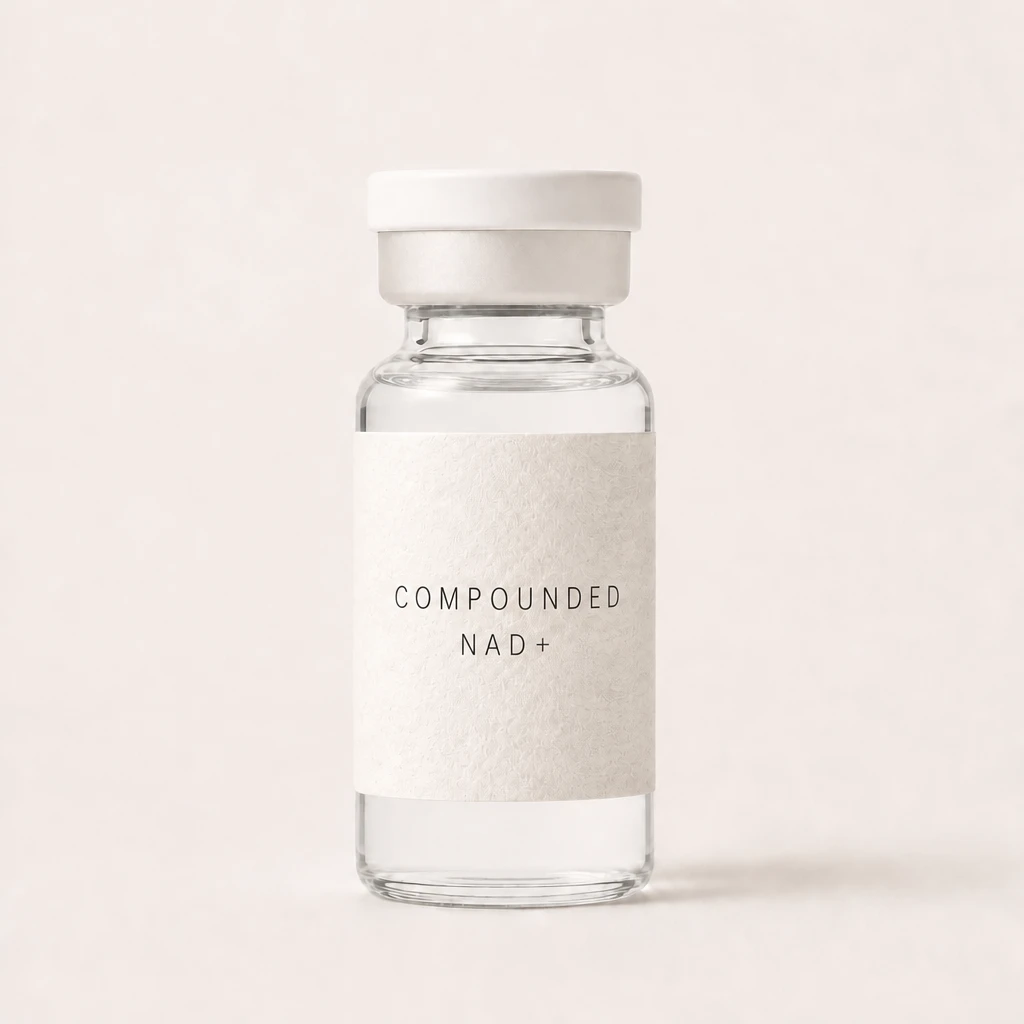
 503A · CompoundedIllustration only. Actual medication will vary.
Longevity · Cellular energy
NAD+
Injection
NAD+ 100 mg/mL in a 10 mL vial, self-administered at home on a schedule set by your provider.
Your Plan Options
NAD+ 100 mg/mL
10 mL vial · 30-day supply
$279 /mo
NAD+ 100 mg/mL
10 mL vial · 90-day supply
$739 /3 mo
Best value
No charge until a provider prescribes. Prescription required.
Clinical information
What this is, in plain language.
NAD+ (nicotinamide adenine dinucleotide) is a coenzyme involved in cellular energy metabolism. This injectable preparation is prepared by a licensed 503A compounding pharmacy and dispensed only when a licensed provider determines it is clinically appropriate.
Active ingredients
NAD+ 100 mg/mL.
Mechanism
Coenzyme involved in cellular energy production and repair pathways.
Administration
Subcutaneous injection on a schedule set by your prescriber.
Who it is for
Adults interested in cellular-energy support, when clinically appropriate.
Common effects
Injection-site discomfort, flushing, nausea, fatigue. Discuss full risks with your provider.
Important safety & compliance information
Compounded NAD+ is not FDA-approved. It is prepared by a licensed 503A compounding pharmacy and is descriptive only — it is not a branded drug. Product imagery shown here is illustration only; actual medication is dispensed in a pharmacy-labeled container and will vary in appearance. A prescription is required and is issued only when a licensed provider determines treatment is clinically appropriate. This page is not medical advice. Discuss benefits, risks and side effects with your provider.